Knowledge hub
The residential electrical service path
Understand the equipment between the utility supply and the circuits in your home—and which parts may change in an upgrade.
Explore this section
Choose a specific guide.
Each topic covers a distinct planning question and links to the relevant source and next step.
 01 / Service component
Electrical panel
What the electrical panel does and how it can affect a residential service upgrade.
Read guide →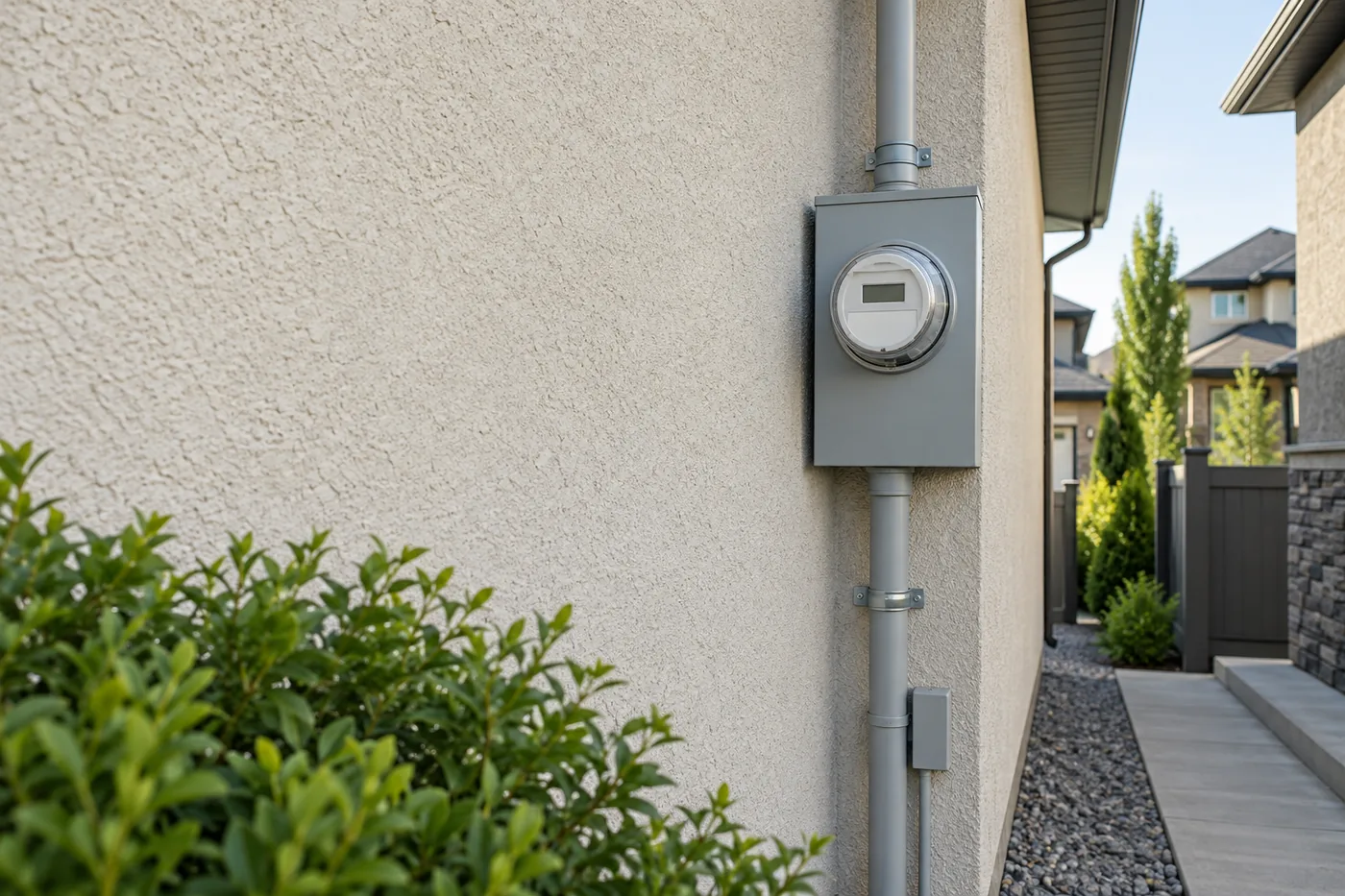 02 / Service component
Meter base
What the meter base does and how it can affect a residential service upgrade.
Read guide →03 / Service componentService mast
What the service mast does and how it can affect a residential service upgrade.
Read guide →04 / Service componentMain breaker
What the main breaker does and how it can affect a residential service upgrade.
Read guide →05 / Service componentService conductors
What the service conductors does and how it can affect a residential service upgrade.
Read guide →06 / Service componentMain disconnect
What the main disconnect does and how it can affect a residential service upgrade.
Read guide →07 / Service componentOverhead service drop
What the overhead service drop does and how it can affect a residential service upgrade.
Read guide →08 / Service componentUnderground service lateral
What the underground service lateral does and how it can affect a residential service upgrade.
Read guide →Short answer
Electrical capacity is best understood from the project and the complete service path—not from the panel door alone.
Key takeaways
01Choose the project or component closest to your question.
02Use the same Capacity Check across guides.
03Local rules belong in verified jurisdiction pages.
Explore this hub
This section covers Electrical panel, Meter base, Service mast, Main breaker, Service conductors, Main disconnect, Overhead service drop, Underground service lateral. Each page focuses on a distinct homeowner decision.
How pages connect
Project pages connect planned equipment to service-size, energy-management, cost and local process guides.
Professional boundary
Educational pages help homeowners prepare better questions. Final electrical design remains with qualified professionals and authorities.
Decision table
What the evidence changes
- Electrical panel
- Dedicated guide available
- Meter base
- Dedicated guide available
- Service mast
- Dedicated guide available
- Main breaker
- Dedicated guide available
- Service conductors
- Dedicated guide available
- Main disconnect
- Dedicated guide available
Typical project sequence
From question to documented work
- 01Choose a topic
- 02Run the Capacity Check
- 03Review local requirements
- 04Request assessment if useful
Sequence and responsibilities vary by jurisdiction, utility and scope.
Evidence
Sources and verification
Published by the 200AmpPanel.ca Research Team, a HAUSE specialist property. Updated 2026-08-31.
Questions
Frequently asked
Where should I start?
Start with the project you want to add, then use the Capacity Check with your current service information.
What should I do next?
Use the Capacity Check to organize what you know, then have a qualified electrical contractor complete the assessment required for the property and jurisdiction.
Your next step
Bring the right facts to the first conversation.
Record the visible service clue, planned equipment and any relevant documents. The free brief organizes your questions; a qualified person verifies capacity and scope.